Content Strategy Guide: How to Build a Social Media Content Calendar for 2026
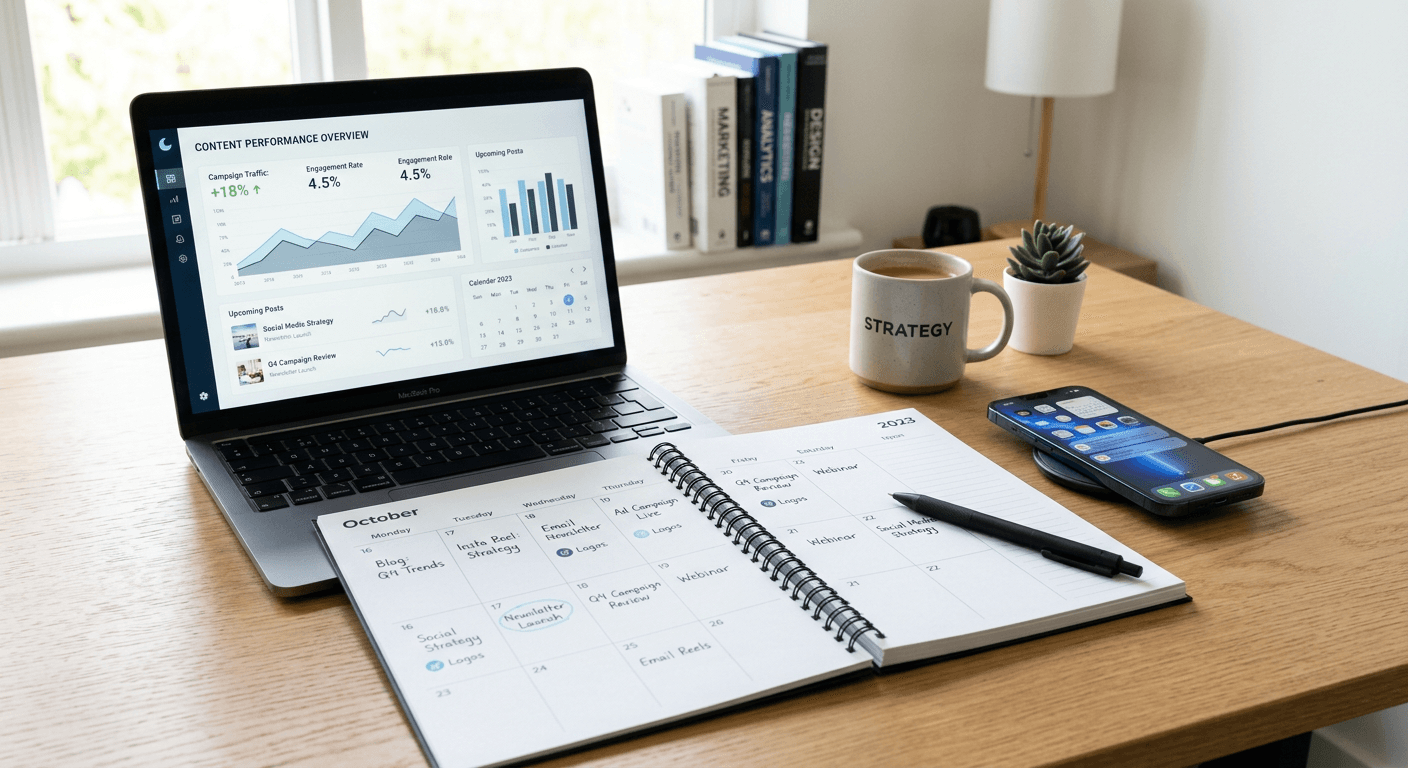
Building a robust social media content calendar for 2026 requires moving beyond simple scheduling to embrace strategic alignment with business objectives. A high-performing social media content calendar acts as the backbone of your digital presence, ensuring that every post serves a specific function while maintaining a consistent brand voice across increasingly fragmented platforms.
Quick Summary {#quick-summary}
A social media content calendar is a centralized organizational tool used to plan, track, and execute content distribution across multiple channels. By aligning creative assets with data-driven timing, it eliminates reactive posting and enables long-term growth through thematic consistency and performance optimization.
- Increases efficiency by batch-creating content assets.
- Ensures a balanced mix of educational, entertaining, and promotional content.
- Provides a bird's-eye view of upcoming campaigns and seasonal trends.
- Facilitates cross-team collaboration and approval workflows.
Table of Contents {#table-of-contents}
- Defining Content Pillars
- Auditing Your Social Media Performance
- Selecting the Right Tools
- Mapping Your Social Media Content Planner
- Executing the Content Workflow
- Common Pitfalls and Troubleshooting
- Frequently Asked Questions
- Recommended Reads

Defining Content Pillars {#defining-content-pillars}
Content pillars for social media are the 3 to 5 core themes that define your brand identity and inform every piece of content you produce. By establishing these pillars, you ensure that your messaging remains focused, preventing the "content sprawl" that often leads to low engagement and brand dilution. For 2026, these pillars should be rooted in the intersection of audience interest and your unique value proposition.
To define your pillars, categorize your output into distinct buckets such as industry thought leadership, user-generated content, product spotlights, and behind-the-scenes culture. When you utilize a tool like heylink.uk.com to centralize your resources, it becomes easier to tag posts by pillar, allowing you to run analytics and determine which themes resonate most deeply with your specific demographic.
Auditing Your Social Media Performance {#auditing-your-social-media-performance}
Before planning future posts, you must analyze past performance to understand what actually moves the needle. An effective audit identifies which types of social media content yield the highest conversion rates versus those that merely generate vanity metrics like impressions. Look back at the previous 12 months to identify patterns in engagement time, visual formats, and copy length.
Consider the specific nuances of your audience's behavior. Did short-form video outperform static carousels? Were specific times of day consistently better for interactions? Use this historical data to dictate your frequency. If your data reveals that your audience prefers deep-dive educational content, your social media content strategy for 2026 should prioritize long-form video or long-captioned posts over quick, fleeting updates.
Selecting the Right Tools {#selecting-the-right-tools}
Managing a complex calendar requires more than a simple spreadsheet. In 2026, the ecosystem of digital marketing tools has evolved to include AI-assisted scheduling, real-time collaboration platforms, and automated reporting integrations. Choosing the right tool depends on your team size and the volume of content you produce.
When selecting a planner, prioritize platforms that offer a visual grid view for Instagram, calendar views for cross-platform planning, and robust asset management features. The goal is to move from a manual process to an automated pipeline. Centralizing your links and creative assets ensures that team members are always using approved versions of media, which is crucial for maintaining brand integrity.
Mapping Your Social Media Content Planner {#mapping-your-social-media-content-planner}
Once your pillars and tools are set, the actual mapping begins. Start by inputting fixed events, such as product launches, holidays, and industry conferences. These act as your "anchor content." Once these are locked in, fill the gaps with supporting content that aligns with your pillars.
Step 1: Establish a Cadence
Determine the frequency for each platform. Consistency is more important than volume. Use your social media content planner to set a recurring schedule that is sustainable for your team.
Step 2: Categorize by Funnel Stage
Ensure your content serves different stages of the customer journey. Top-of-funnel content should be broad and shareable, while bottom-of-funnel content should address specific pain points and offer solutions.
Executing the Content Workflow {#executing-the-content-workflow}
A successful workflow is defined by its ability to move from idea to publication without friction. Batching is your greatest asset here; rather than creating content daily, spend one or two days a month producing all visuals and captions. This allows for higher production quality and a more cohesive aesthetic across your channels.
Pro Tip: Create a 'Content Bank' folder where you dump raw ideas, screenshots, and inspirations as they occur. This eliminates the 'blank page' syndrome when it comes time to plan the monthly calendar.
After drafting your content, establish a formal review process. This should involve checking for link accuracy, tone compliance, and image resolution. Once approved, schedule the content using your selected tool, ensuring that your tracking parameters are in place so you can measure traffic accurately later.
Common Pitfalls and Troubleshooting {#common-pitfalls-and-troubleshooting}
One of the most frequent mistakes is over-programming, which leaves no room for real-time engagement or reactive trends. While a calendar is a roadmap, it should not be a cage. If a major industry event occurs, be prepared to pause scheduled content to pivot your messaging.
Another common issue is neglecting cross-platform optimization. Posting the exact same image and caption across LinkedIn, X, and Instagram rarely works. Each platform has a unique 'social grammar'. Always tailor your tone and formatting to fit the specific audience of each channel, even if the core message remains the same across your social media content calendar.
Frequently Asked Questions {#frequently-asked-questions}
How far in advance should I plan my social media content?
Plan in one-month blocks. This offers a balance between long-term strategic alignment and the flexibility to adapt to weekly performance trends.
How do I handle sudden, trending topics within my plan?
Always leave 10-15% of your calendar 'empty' to allow for reactive content. If a trend aligns with your brand voice, insert it; otherwise, stay the course.
What is the ideal balance of content types?
Use the 4-1-1 rule: for every 6 posts, 4 should be educational or entertaining, 1 should be a 'soft' promotion, and 1 should be a direct, hard-sell call to action.
How do I measure if my calendar is working?
Focus on engagement-per-reach metrics rather than total follower count. If your content pillars are effective, your engagement rate will climb steadily over time.