Creating a Professional Media Kit: Best Practices and Examples for 2026
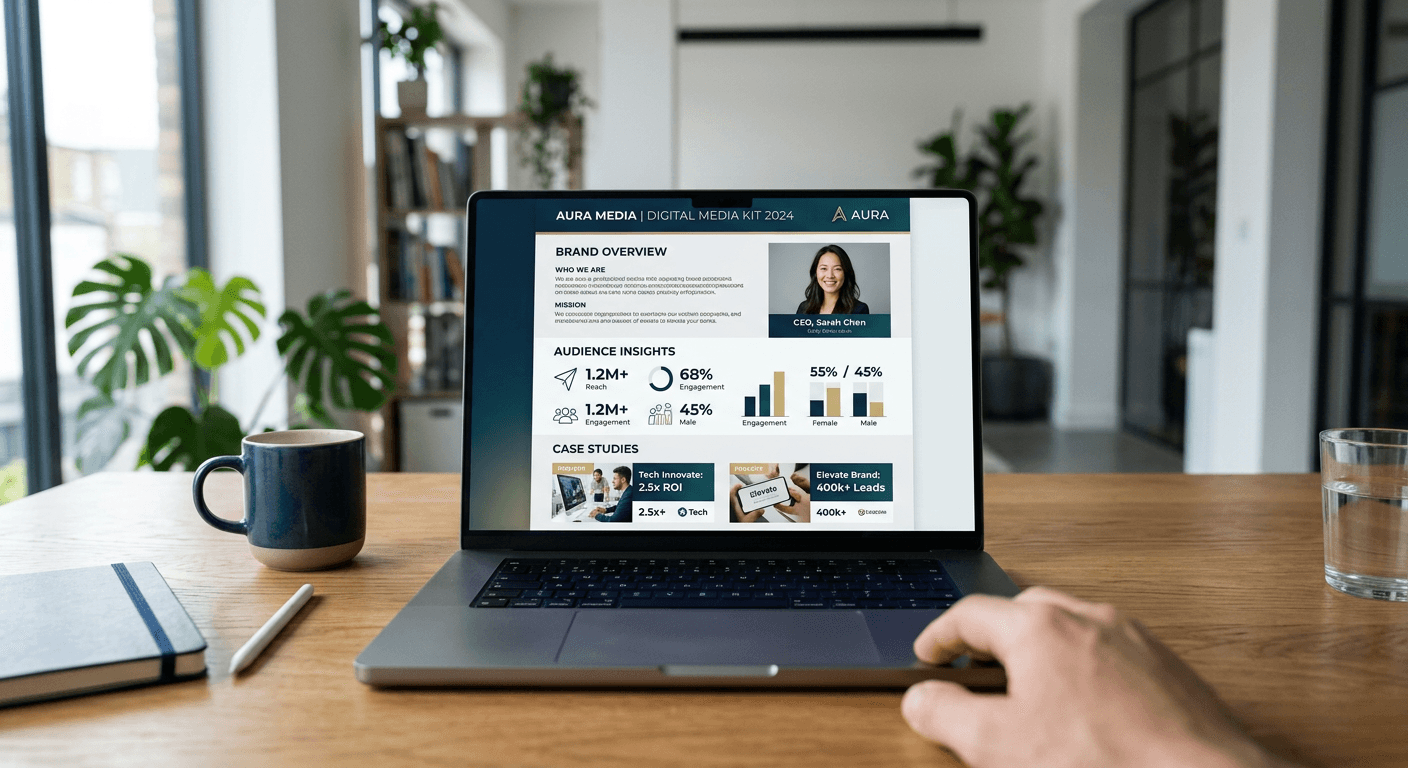
A high-quality media kit serves as the primary handshake between your brand and the external world - including journalists, potential sponsors, and corporate partners. In 2026, the expectations for these documents have shifted from static PDF attachments to interactive, data-driven hubs that prove your value proposition instantly. Whether you are an independent creator or a scaling enterprise, your kit must communicate your narrative, your metrics, and your visual identity with absolute precision to secure opportunities.
Quick Summary {#quick-summary}
A professional media kit is a curated digital resource providing essential information about a brand, business, or creator to the media and potential collaborators. It simplifies the vetting process for partners by consolidating bio data, high-resolution assets, core performance metrics, and contact information into one accessible, brand-aligned document.
- Essential data-driven metrics and audience demographics.
- Standardized visual assets for brand consistency.
- Clear, actionable contact channels for inquiries.
- A cohesive narrative that defines the brand's unique market position.
Table of Contents {#table-of-contents}
- Creating a Compelling Brand Narrative
- Essential Components of a Media Kit
- Designing for Maximum Impact
- Leveraging Data and Analytics
- Common Pitfalls and Troubleshooting
- Frequently Asked Questions
- Recommended Reads

Creating a Compelling Brand Narrative {#creating-a-compelling-brand-narrative}
The core of every successful media kit is the story. Journalists and brand managers receive hundreds of pitches, so your narrative must immediately articulate why your work matters. Start by defining your brand’s mission statement and the specific problem you solve for your audience. Avoid jargon and focus on clarity - ensuring the reader understands your value proposition within seconds of opening the document.
When crafting your bio or company description, tailor the tone to match your industry. If you are in the B2B tech space, keep the language formal and benefit-oriented. If you are a lifestyle influencer or creative, infuse the copy with personality. For those looking to streamline their digital presence, you can visit heylink.uk.com to consolidate your various social channels and professional links, ensuring your media kit acts as a central hub for all your online activities.
Essential Components of a Media Kit {#essential-components-of-a-media-kit}
Core Assets and Visual Identity
Your kit must contain a folder of high-resolution brand assets, including logos, headshots, and product imagery. Consistency is paramount; provide these in both color and monochrome formats to ensure they function well on different backgrounds. Include a clear 'Usage Policy' to prevent misuse of your intellectual property.
Audience Demographics and Reach
Data is the currency of modern partnerships. Include a breakdown of your audience, such as age ranges, geographic locations, and core interests. Authentic, verified data builds trust. Whether you are building brand kit examples or a comprehensive press release, presenting this data visually through charts or infographics makes it significantly easier for decision-makers to digest your reach.
Designing for Maximum Impact {#designing-for-maximum-impact}
Design is not merely aesthetic; it is functional. A cluttered layout leads to high bounce rates from potential partners. Utilize clean typography, sufficient white space, and a logical flow that leads the reader from your story to your contact details. Use a consistent color palette that aligns with your website and social media presence to reinforce brand recognition.
Interactive design elements are the standard for 2026. Rather than relying on a static 20-page document, consider a dynamic landing page approach. This allows you to update your reach and engagement numbers in real-time, ensuring that a brand manager looking at your site next month sees the same updated stats as someone looking at it today. Use clear, prominent buttons for 'Download Assets' or 'Contact for Partnership' to reduce friction.
Leveraging Data and Analytics {#leveraging-data-and-analytics}
Your marketing report section should be the highlight of your media kit. Do not just list follower counts. Instead, provide engagement rates, click-through rates, and case studies of past successful collaborations. Qualitative data—such as audience testimonials or press mentions—can be just as valuable as quantitative data when building credibility.
When presenting your metrics, provide context. If you had a campaign with high engagement, explain the 'why' behind the result. Did a specific content pillar perform better than others? Highlighting your ability to analyze performance demonstrates to partners that you are a professional, data-conscious collaborator who will treat their investment with care.
Pro Tip: Never send a file larger than 5MB via email. Instead, link to a hosted cloud folder or a dedicated webpage in your email signature so your kit is always accessible without triggering spam filters.
Common Pitfalls and Troubleshooting {#common-pitfalls-and-troubleshooting}
One of the most frequent mistakes is failing to update the kit. An outdated media kit containing 2023 statistics will immediately disqualify you from serious consideration. Set a quarterly calendar reminder to audit your metrics and ensure all links are active. Broken links or outdated bios reflect poorly on your professionalism.
Another pitfall is providing too much information. A media kit is not an autobiography; it is a business tool. If a document exceeds 5-8 pages, reconsider the density of your content. Ensure every paragraph serves a specific purpose, either building credibility, establishing reach, or providing contact information. If you find yourself over-explaining, move that content to a dedicated 'Portfolio' page on your website.
Frequently Asked Questions {#frequently-asked-questions}
How often should I update my media kit?
Update your statistics and key performance metrics at least once per quarter. If you hit a major milestone, such as a new partnership or a significant follower increase, update it immediately.
Should I include pricing in my media kit?
It is generally better to keep pricing out of a public media kit. Instead, state that you are 'open to discussing custom partnership packages' to maintain leverage during negotiations.
What file formats should I include in my assets folder?
Provide your logo in SVG or PNG (transparent background) format for digital use, and ensure your headshots are provided as high-quality JPEGs or HEIC files.
Is a PDF media kit still relevant?
Yes, but it should be paired with a digital version. Always have a PDF version ready for email attachments, but prioritize a web-based landing page for accessibility.