How to Build a Professional Media Kit to Showcase Your Brand Identity in 2026
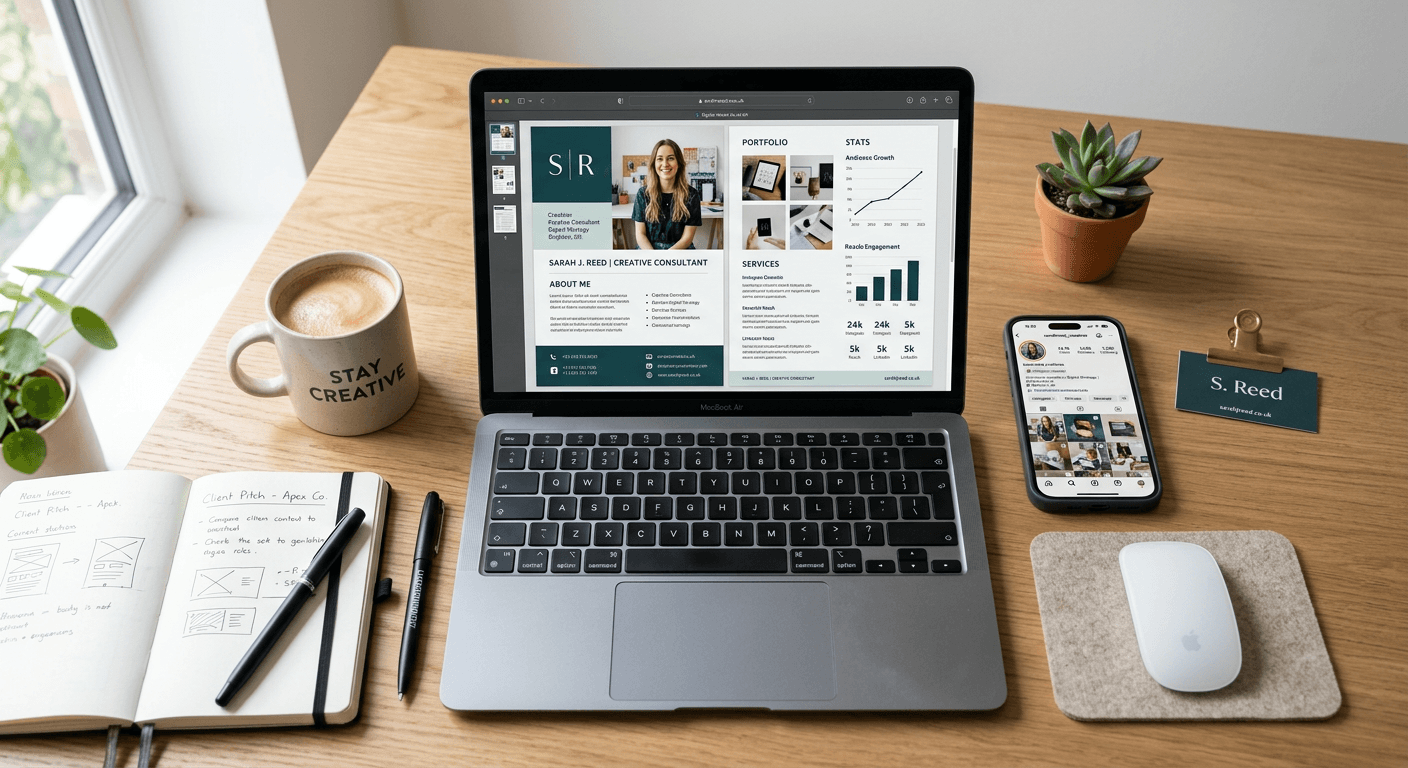
Developing a professional media kit is a critical step for UK creators and freelancers aiming to monetise their digital presence and forge partnerships with brands. A well-structured document serves as your professional calling card, providing potential collaborators with the necessary evidence of your influence, audience demographics, and aesthetic consistency. Rather than relying on sporadic social media snapshots, a comprehensive media kit acts as a centralised resource that simplifies the decision-making process for marketing managers and PR agencies.

Quick Summary {#quick-summary}
A media kit is a digital portfolio that highlights your reach, audience data, and brand identity to attract potential business collaborators. It serves as a static, authoritative reference document that distils your social media metrics and creative value into a concise, easily shareable format for professional partnerships.
- Essential audience demographics and engagement rates.
- Clear, high-resolution visual assets and brand voice.
- Proven examples of past collaborations and campaign success.
- Contact information and clear call-to-action details.
Table of Contents {#table-of-contents}
- Defining Your Value Proposition
- Structuring Your Media Kit Content
- Designing for Maximum Impact
- Common Pitfalls and Troubleshooting
- Frequently Asked Questions
- Recommended Reads
Defining Your Value Proposition {#defining-your-value-proposition}
Before you begin assembling your kit, you must define the specific value you provide to a brand. Are you an authority in sustainable fashion, a tech reviewer, or a lifestyle influencer with a highly engaged local community? Your media kit must articulate why a partnership with you will deliver a measurable return on investment for the partner. Avoid generic claims; instead, focus on your unique positioning within your niche and the specific needs you satisfy for your audience.
Consider what makes your content distinct. Are you known for high-production video quality, long-form insightful captions, or a specific tone of voice that resonates with a particular demographic? By clearly defining your brand identity early on, you create a narrative thread that runs through every slide of your media kit. This coherence is what distinguishes professional creators from hobbyists, making it easier for agencies to visualise how your content aligns with their upcoming campaigns.
Structuring Your Media Kit Content {#structuring-your-media-kit-content}
A robust media kit typically follows a logical flow that guides a potential partner from interest to action. Start with a compelling "About Me" section that introduces your professional history and creative mission. Follow this with concrete data points, including your follower count, average engagement rate, and primary traffic sources. In the UK market, brands often look for specific regional insights, so highlighting your UK-based audience percentages can significantly increase your appeal.
Next, incorporate a portfolio section that showcases your best work. Rather than dumping every post you have ever created, curate 3-5 media kit examples that illustrate different types of successful content - such as product unboxings, event coverage, or collaborative educational videos. Include a brief summary of the objectives and results for each to demonstrate your capability to deliver on specific goals, such as driving website clicks or increasing brand awareness.
Designing for Maximum Impact {#designing-for-maximum-impact}
Visual presentation is just as important as the data you present. Your kit should strictly follow your personal brand guidelines examples, ensuring that the fonts, colour palettes, and imagery are consistent with your social media profiles. If your brand is vibrant and youthful, your design should reflect this; if it is minimalist and luxury-focused, your layout should use ample white space and elegant typography.
When organising your brand kit examples, prioritise readability. Avoid cluttered pages with excessive text. Instead, use bullet points, clear headings, and visual charts to convey information quickly. Ensure that your contact details are prominently displayed on every page or clearly linked in the footer. A digital format is preferred over physical printing, as it allows you to embed links directly to your social media kit and live campaign pages.
Pro Tip: Keep your media kit updated at least once a quarter. Stale engagement numbers or outdated links are a red flag for professional brands and may lead them to question your commitment to growth.
Common Pitfalls and Troubleshooting {#common-pitfalls-and-troubleshooting}
One of the most frequent mistakes creators make is exaggerating their metrics. Brands use advanced tools to verify audience data, and any discrepancy between your claimed figures and reality will damage your professional reputation. Always provide honest, transparent data, even if your follower count is modest; high engagement and niche loyalty are often more valuable to brands than inflated vanity metrics.
Another common issue is failing to provide a clear, actionable contact path. Ensure that the email address listed in your media kit is checked daily and that your inquiry process is streamlined. If a brand representative has to search for your contact details or navigate through broken links, they are likely to move on to the next candidate. Test every link in your digital kit on both desktop and mobile devices to ensure a seamless experience.
Frequently Asked Questions {#frequently-asked-questions}
How long should a media kit be?
Aim for a concise document, typically between 4 and 8 pages. A media kit is intended to be a snapshot of your value, not an exhaustive biography.
Should I include my pricing in the media kit?
Pricing is subjective and depends on the scope of the campaign. Most creators omit specific rates, choosing instead to use a call-to-action like "Rate card available upon request."
What are the most important metrics to include?
Focus on your engagement rate, reach, audience demographics (age, location, and interests), and your average click-through rate if you are directing traffic to third-party sites.
Is it better to send a PDF or a web-based link?
A web-based landing page is superior because it can be updated in real-time without needing to re-send files. It also allows you to track how many times your media kit has been viewed.