How to Build an Effective Social Media Content Calendar for UK Brands
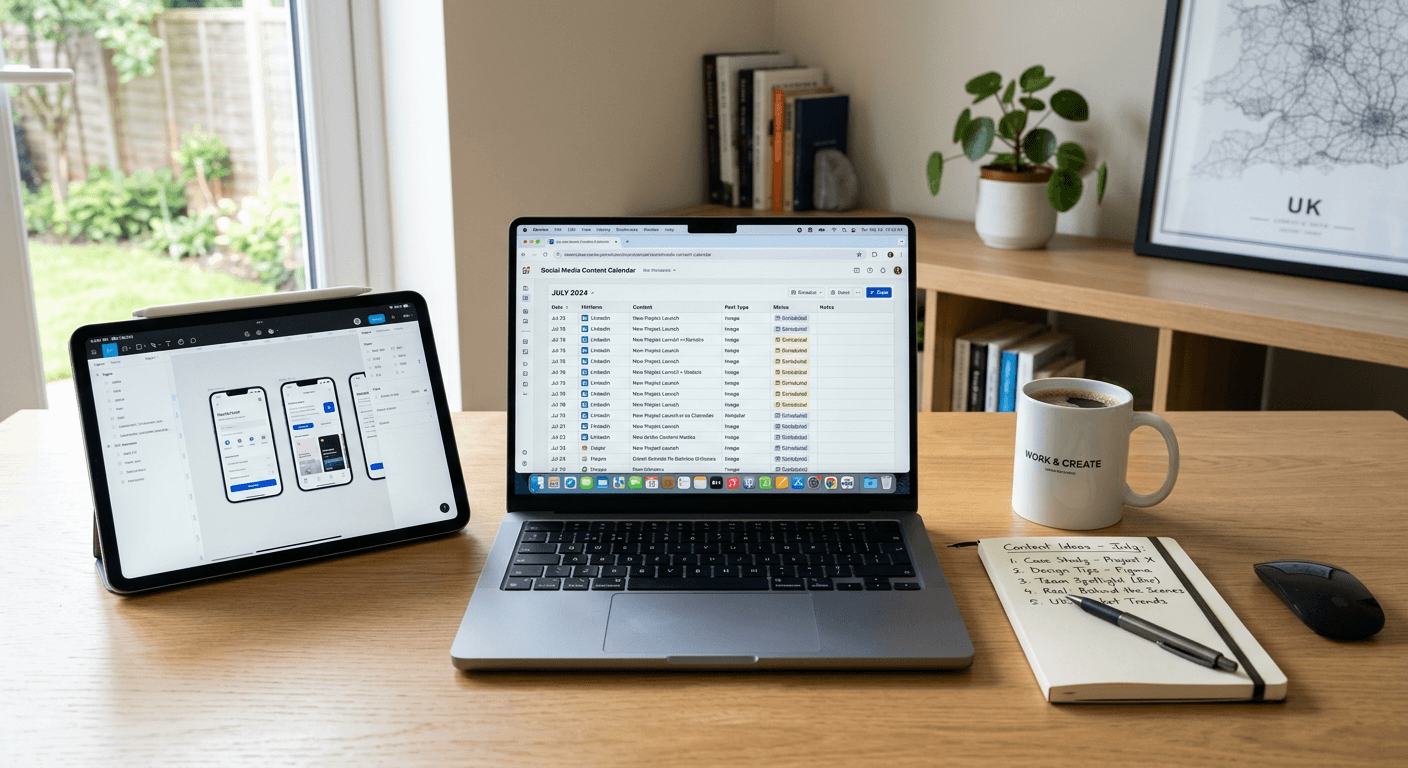
Developing a consistent digital presence requires more than spontaneous posting; it demands a structured approach to managing your online narrative. A well-constructed social media content calendar acts as the backbone of your marketing strategy, allowing you to align your creative output with broader business goals. By mapping out your messaging in advance, you can ensure a balanced mix of promotional, educational, and engaging content that resonates with your specific audience.

Quick Summary {#quick-summary}
A social media content calendar is a strategic scheduling tool used to plan, organise, and track content across multiple digital platforms. It ensures brand consistency, prevents last-minute creative blocks, and enables data-driven adjustments to improve engagement levels.
- Streamlines the workflow for content creation and distribution.
- Ensures a consistent posting frequency to maintain algorithm visibility.
- Facilitates cross-platform coordination of marketing campaigns.
- Provides a central hub for tracking key performance indicators.
Table of Contents {#table-of-contents}
- Quick Summary
- Strategic Planning and Goal Setting
- Structuring Your Social Media Content Planner
- Mastering Social Media Post Design
- Optimising Social Media Graphics
- Curating High-Impact Social Media Assets
- Generating Fresh Content Ideas for Social Media
- Common Pitfalls and Troubleshooting
- FAQ
- Recommended Reads
Strategic Planning and Goal Setting {#strategic-planning-and-goal-setting}
Before you begin populating a grid with dates and captions, you must define the purpose of your social media activity. Effective planning starts with clear objectives, whether you aim to increase brand awareness, drive traffic to your social media integration points, or foster community engagement. Setting measurable targets for the quarter allows you to determine what type of content will move the needle and how frequently you need to publish to stay relevant.
Identify your target demographics within the UK market to tailor your tone and messaging. Understanding when your audience is most active and what formats - such as short-form video, carousel posts, or long-form thought leadership - they prefer will inform your strategic direction. Use these insights to build a foundation that supports your growth rather than simply filling space on a feed.
Structuring Your Social Media Content Planner {#structuring-your-social-media-content-planner}
A robust social media content planner serves as a master document for your creative workflow. Organise your planner to include columns for publication dates, specific platforms, content pillars, status updates (e.g., drafted, under review, scheduled), and performance metrics. This level of granularity prevents silos and ensures that your messaging remains cohesive across different channels.
Pro Tip: Utilise colour-coding within your planner to visually distinguish between content categories like 'Educational', 'Promotional', and 'Behind-the-Scenes'. This helps you spot lopsided schedules at a glance, ensuring you maintain an ideal ratio of value-led posts to sales-driven content.
Maintain a 'content bank' within your planner where you store recurring themes and evergreen material. This allows you to repurpose high-performing content during busy periods, ensuring that you never have to scramble for ideas when resources are tight. Keeping your documentation centralised reduces friction in the production process and allows for collaborative input from team members or contributors.
Mastering Social Media Post Design {#mastering-social-media-post-design}
Visual consistency is vital for building brand recognition in a saturated market. When approaching social media post design, establish a set of visual guidelines that dictate your colour palette, typography, and logo usage. Consistency in these elements builds trust; when users see your content, they should recognise it as yours before even reading the account name.
Adopt a modular approach to design by creating templates for frequently used formats, such as event announcements or customer testimonials. This does not mean every post must look identical, but they should belong to the same visual family. Balance your design by incorporating plenty of white space, clear focal points, and legible text hierarchies, particularly for mobile users who frequently scroll through feeds at high speeds.
Optimising Social Media Graphics {#optimising-social-media-graphics}
Optimising social media graphics involves more than just aesthetics; it concerns technical performance and accessibility. Ensure your images are exported in the correct dimensions for each platform - such as 1080x1920 pixels for vertical video or 1080x1080 for square feed posts - to avoid unwanted cropping or pixelation. High-quality assets reflect the professionalism of your brand.
Consider accessibility by adding alt-text to your images and ensuring there is sufficient contrast between your background colours and text. These practices not only make your content inclusive but also improve your reach by providing search engines with context regarding your visual media. Regularly audit your graphics to ensure they reflect current branding updates and seasonal shifts.
Curating High-Impact Social Media Assets {#curating-high-impact-social-media-assets}
Your social media assets consist of all the files you use to build your brand presence, including stock photography, custom photography, short-form video clips, and infographics. Organise these in a shared, cloud-based folder structure with clear naming conventions. This allows for seamless retrieval and prevents the common issue of losing high-value assets across multiple devices.
Invest in creating a library of 'hero' assets - high-quality images or videos that can be adapted for multiple uses over several months. By varying the aspect ratio or overlaying different text elements, you can maximise the value of a single photoshoot or video session. Always verify that you possess the necessary licensing for any stock images or music used in your assets to avoid potential copyright complications.
Generating Fresh Content Ideas for Social Media {#generating-fresh-content-ideas-for-social-media}
Stagnation is the biggest threat to long-term social media engagement. To consistently generate content ideas for social media, keep a list of frequently asked questions from your customers; these are goldmines for educational content. Monitor industry-specific forums, local news, and trending topics to see how you can offer a unique perspective or a helpful solution to current discussions.
Encourage user-generated content by inviting your audience to share their experiences with your brand. This not only provides you with authentic social proof but also alleviates the pressure to constantly produce original creative. Dedicate time each month to brainstorming sessions where you review the previous month's analytics and adjust your upcoming content ideas based on what truly resonated with your followers.
Common Pitfalls and Troubleshooting {#common-pitfalls-and-troubleshooting}
One common error is over-planning to the point of rigidity. If a major cultural event or industry-specific news occurs, your pre-scheduled content may suddenly feel tone-deaf or irrelevant. Build flexibility into your process by reviewing your calendar weekly to see if any posts require pausing or updating to align with the current climate.
Another pitfall is ignoring the data. If you are producing high-quality graphics that receive zero engagement, you must be willing to pivot. Analyse your metrics to understand the 'why' behind the numbers - perhaps your post timing is suboptimal, or your calls to action are not compelling enough. Use these findings to refine your strategy rather than persisting with a method that is not delivering results.
FAQ {#faq}
How far in advance should I plan my social media content?
Planning two to four weeks in advance is generally recommended for most brands. This provides a balance between preparation and the flexibility to react to trending topics.
What is the best way to handle content repurposing?
Identify your highest-performing posts from the last three months. Convert these into different formats, such as turning a blog post into an infographic or a long-form video into several short clips.
Should I post the same content on every social media platform?
While you should maintain a consistent brand message, tailor your delivery to each platform's culture. For example, use more professional, concise language for LinkedIn and more informal, visual-heavy content for platforms like Instagram or TikTok.
How can I measure the success of my content calendar?
Track key performance indicators (KPIs) such as engagement rate, click-through rate to your website, and reach. Regularly cross-reference these metrics with your goals to gauge progress.