How to Launch a Successful Social Media Campaign for Your Small Business in 2026
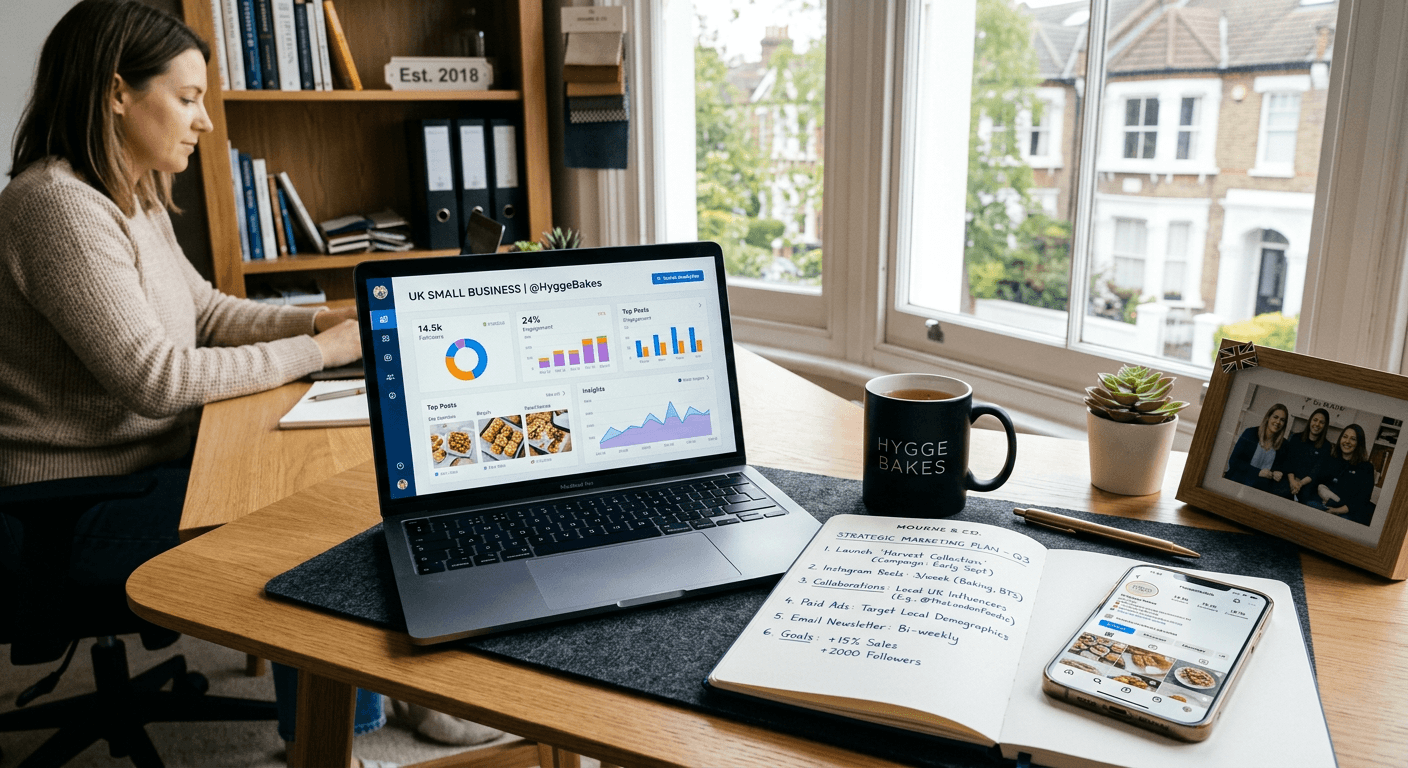
Launching an effective social media campaign is a cornerstone of modern digital growth for small businesses in the UK. By moving beyond ad-hoc posting to a structured, data-driven approach, businesses can cultivate loyal communities and drive measurable conversions. A cohesive strategy ensures that your brand voice remains consistent across platforms, helping you cut through the noise and reach your specific target audience where they spend their time.
Quick Summary {#quick-summary}
A successful social media campaign involves defined objectives, audience targeting, and consistent content delivery. It requires tracking metrics to refine performance over time.
- Set specific, measurable goals (SMART criteria).
- Identify and map your ideal target audience demographics.
- Create high-value social media content aligned with brand pillars.
- Monitor social media engagement to build community trust.
Table of Contents {#table-of-contents}
- Define Your Campaign Objectives
- Audience Research and Segmentation
- Developing a Content Strategy
- Implementing Social Media Advertising
- Measuring and Optimising Performance
- Common Pitfalls and Troubleshooting
- FAQ
- Recommended Reads
Define Your Campaign Objectives {#define-your-campaign-objectives}
Before you produce a single piece of creative, you must clarify what success looks like for your business. An effective social media marketing plan starts with goals that are Specific, Measurable, Achievable, Relevant, and Time-bound. Are you aiming to drive traffic to your professional landing page, increase brand awareness, or generate direct sales? Each objective requires a distinct approach to messaging and call-to-action placement.
Establishing these KPIs early on prevents resource wastage. For example, a campaign designed for lead generation will look significantly different from one intended for community building. If you are a UK freelancer or local service provider, your metrics might focus on appointment bookings via a centralised link, whereas an online shop might prioritise conversion rates from product-focused posts. Documentation of these targets serves as your north star throughout the campaign duration.
Audience Research and Segmentation {#audience-research-and-segmentation}
Understanding who your audience is remains the most critical factor in digital marketing. Use existing platform insights to determine the age, location, and interests of your current followers. If your business operates primarily in the UK, identify the regional nuances and peak active hours for your specific customer base. This data allows you to craft messaging that resonates personally rather than broadcasting to a generic void.
Segmentation allows you to tailor your communication style to different buyer personas. A small business owner might find that their audience on one platform prefers quick-fire video tips, while the audience on another engages more deeply with long-form educational posts. By dividing your efforts, you ensure that the right content reaches the right people at the optimal time, thereby increasing the likelihood of genuine social media engagement.
Developing a Content Strategy {#developing-a-content-strategy}
Consistency is the engine of any social media strategy template. Create a content calendar that balances educational, inspirational, and promotional material to keep your feed balanced. Relying too heavily on sales pitches often leads to audience fatigue, so aim for a ratio where at least 70% of your content provides genuine value, such as solving a specific problem or entertaining your demographic.
Quality production also matters in 2026. Whether you are using high-definition video or well-designed static graphics, ensure your visuals reflect your brand's identity. Use tools to schedule posts in advance to maintain a steady flow of updates. Remember to facilitate easy navigation for your audience by using a consolidated link system, which helps you track audience engagement and understand which content pieces are driving the most traffic to your key destinations.
Implementing Social Media Advertising {#implementing-social-media-advertising}
Organic reach is vital, but paid social media advertising often provides the necessary acceleration for a new campaign. Start by allocating a small, testable budget to identify which audience segments yield the best return on investment. Use A/B testing for your ad creative, testing variations in headlines, imagery, and button copy to see what triggers the most clicks.
When setting up ads, ensure your tracking pixels are correctly installed on your website or landing pages. This allows you to retarget users who have previously shown interest in your brand, creating a 'warm' audience that is more likely to convert. Be wary of over-spending on broad targeting; instead, use the platform's granular controls to focus on interests, behaviours, and retargeting lists.
Measuring and Optimising Performance {#measuring-and-optimising-performance}
Once the campaign is live, your role shifts from creator to analyst. Monitor your dashboard weekly to compare actual results against your initial goals. Pay close attention to metrics such as click-through rate (CTR), conversion rate, and cost per acquisition. If a particular post or ad is underperforming, do not be afraid to pivot by adjusting the copy or the targeting parameters.
Pro Tip: Do not rely on vanity metrics like 'likes' or 'followers' to judge the success of your campaign. Focus on 'meaningful' metrics - such as clicks to your website, sign-ups, or actual purchases - that directly contribute to your bottom line.
Common Pitfalls and Troubleshooting {#common-pitfalls-and-troubleshooting}
One common error is inconsistency. Posting sporadically causes algorithms to deprioritise your content, making it invisible to your audience. If your engagement drops, analyse whether your content frequency has wavered or if your messaging has drifted away from your brand pillars.
Another frequent mistake is ignoring the importance of mobile optimisation. A significant portion of social media traffic arrives via mobile devices; if your landing pages or websites take too long to load or are difficult to navigate on a phone, you will lose potential customers immediately. Always test your links and landing pages on different devices to ensure a seamless experience.
FAQ {#faq}
How often should I post on social media for my small business?
There is no 'perfect' number, but consistency beats frequency. Aim for a schedule you can maintain indefinitely, such as three to five times per week, rather than posting daily for a week and then stopping.
What is the best way to track social media engagement?
Use the built-in analytics provided by the platforms alongside external tools. Look for shares, saves, and comments, as these indicate a higher level of audience intent than simple 'likes'.
Can I run a successful campaign with a small budget?
Yes. Targeted micro-campaigns often outperform broad, high-spend campaigns because they allow you to focus on a hyper-specific audience segment at a lower cost.
How do I maintain brand consistency across different platforms?
Develop a brand style guide that includes your primary fonts, colours, tone of voice, and logo usage. Apply these elements to every visual and written update you publish.